
By Joe Sheppard, Sustainability Co-Lead, Kinetic UK
Out of Home has an enviable track record in delivering sustainable advertising. And brands that invest in the channel are by default helping to fund myriad of local community and environmental initiatives.
Coming from an Out of Home agency you might be thinking “Well, they would say that, wouldn’t they?”
Of course, and with good reason:
Out of Home has always been a medium that benefits the communities it operates in. The majority of the public almost certainly don’t realise that the advertising at a bus shelter funds the construction, maintenance, and cleaning of that shelter. Commuters on the London Underground, the Metrolink in Manchester, or Edinburgh Trams will probably not know that much of the revenue from the advertising they see on those networks goes back to the transit service to help fund local public transport – taking cars off the road in the process.
And it’s a model repeated in countless towns and cities across the country. In fact, almost 50p in every £1 of Out of Home revenue already goes back to the local authorities they sit in to help fund development in public infrastructure, sustainable transport networks and the wider economy.
More recently, there’s been more visible examples of Out of Home’s positive impact on urban areas. These include wider use of living walls and bee bus stops, rainwater harvesting units, solar panels, and poster sites that help purify the urban air.
Meanwhile Out of Home media owners are investing in more eco-friendly inventory, such as using recycled materials and sustainable woods alongside different materials like Kavalan, which offers all the strength, durability and benefits of PVC, but none of the harmful environmental effects.
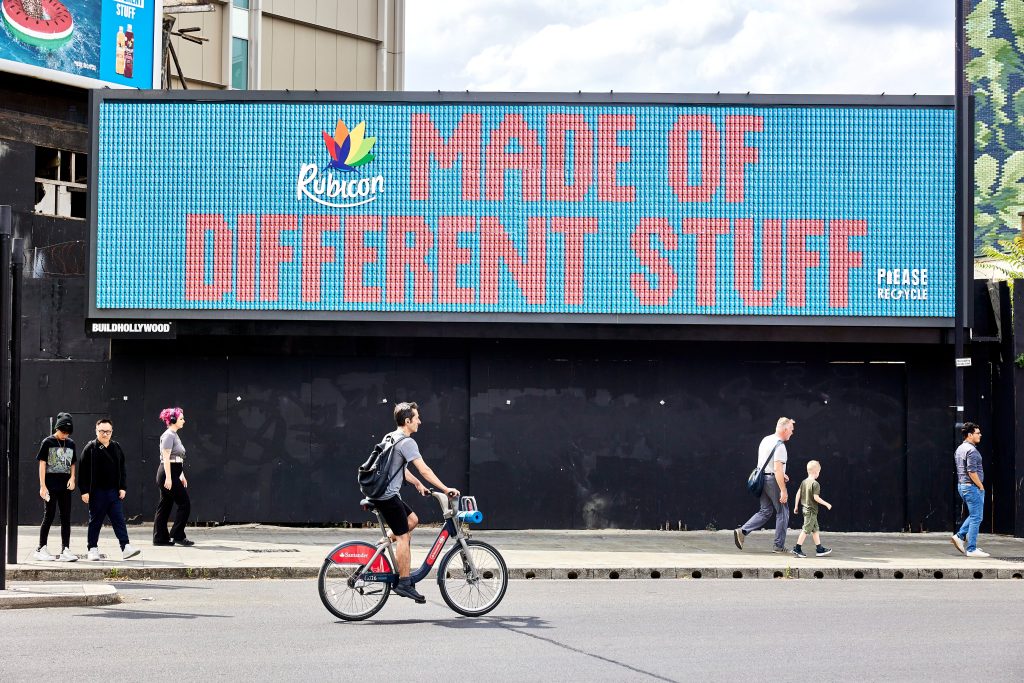
Out of Home has drawn criticism from environmental activists due to the power consumption of digital screens. But the 30,000 digital Out of Home screens in the UK only represent a small fraction of the 100 million total screens in the country. And three of the four largest media owners’ estates are now powered by 100% renewable energy. Out of Home is also a one-to-many medium which means a single OOH screen can reach a significant audience. It would take other media many thousands and in some case millions of screens to reach similar audiences. In fact, digital Out of Home is one of the most sustainable media on a cost-per-impressions basis.
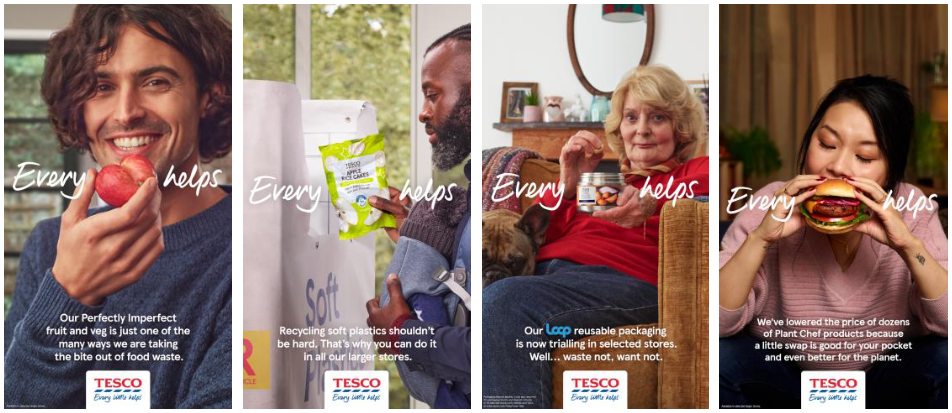
OOH can also be used by brands to drive real changes to consumer behaviour. It’s no accident that Out of Home played a key role in Tesco’s COP26 campaign. The supermarket’s most carbon-neutral OOH campaign to date.
The campaign used multiple data sources to identify regions where greener actions were needed and then deployed specific messages on individual screens by location.
This meant that in areas trying to reduce meat consumption, Tesco’s Plant range creative showed, where people needed to recycle more, they were informed of Tesco’s in-store soft plastics recycling initiative, and in towns where food waste was an issue, leftover recipes ideas were displayed.
The campaign provided valuable information on small lifestyle changes that would help protect the future of our planet, and where Tesco could help. All delivered using renewable energy, recycled and pollutant-reducing materials, and even more importantly, the campaign generated much needed environmental action.
A strong track record does not however make Out of Home immune to criticism, nor does it mean there are areas where we cannot improve.
The public are holding us to account and scrutiny will only increase in the future. And innovation and technology on both a large and a small scale will be essential. The next generation of digital screens will use significantly less power and there will be more use of solar energy at advertising sites. Over the coming year we will see an expansion of living walls and bee bus stops, increasing biodiversity by creating “stepping stones” for flora and fauna in urban areas. Use of treatments such as PURETi, which both purifies the air around poster sites, and makes the posters themselves self-cleaning will become more widespread.
Media owners are already well on their way to making recycling their default position. 100% recyclable bus stops – complete with seats made from milk bottles and industrial furniture waste – are becoming the new normal.
Reducing the sector’s carbon footprint requires action throughout the supply chain and not all innovations will make headlines. None-the-less increasing the use of electric vehicles and machinery and the positive steps we have taken toward sending zero waste to landfill will all have an impact. Use of LED lighting can decrease emissions on an OOH advertising site by 40%.

Sustainability isn’t just the right thing to do. Today it is a commercial imperative. Consumers want brands to do more when it comes to real-world responsibility. And they’re not afraid to call brands out publicly about it, or vote with their wallets.
Due to its community-oriented nature and ability to achieve personalisation for different groups, Out of Home is the trusted broadcast medium across people from all Minority Ethnic groups. This investment into responsible choices and connection with communities, we believe, makes Out of Home the most sustainable and inclusive media channel.
Sustainability is in Out of Home’s DNA. The sector can be proud of its achievements however it is far from complacent. Now is the time to go further, and continue to help brands deliver on their green promises.
For more information about sustainability in Out of Home, get in touch with Joe Sheppard or Shahin Ejtehadi, Kinetic UK’s Sustainability Leads.
This article was originally published in The Drum.
