
Latest audience data shows how well UK OOH environments bounced back in January, despite the WFH order.
Commuting and the way we work is changed forever. But that doesn’t mean OOH audiences are staying at home. In fact, two thirds of the UK working population travelled into work in January, and now the work from home (WFH) order has been lifted, audiences can’t get back to normal life quick enough.
So, what does this mean for brands interested in OOH? Our latest audience data shows many environments are maintaining or exceeding pre-Covid levels of impact delivery. We’ve compiled a list of FAQs to get you up to date with the market.
Did OOH see a reduction in audiences across January due to the WFH guidance?
Journeys data shows a slight drop in audiences compared to January 2020, but only on Rail and the London Underground. And this was largely offset by other environments such as Roadside, POS and Mall all outperforming pre-Covid levels.
This is backed up by new ONS data showing that even when WFH advice was in place, two-thirds (66%) of the working population were still travelling into work.
Since the WFH order was lifted, we’ve seen OOH audiences return quickly, with Roadside, POS and Malls all maintaining or exceeding pre-Covid levels of impact delivery. Transport environments have also bounced back, returning to levels seen in November before the onset of the Omicron variant.

Are there any new patterns to people’s commuting habits?
Surprisingly, there doesn’t appear to be any particular day singled out for flexible working. Daily share of impact delivery is largely the same as it was pre-Covid, which may reflect the fact that most people who were commuting before are still doing so, either through necessity or choice.
Footfall across all environments continues to show a stable distribution by day of week

Source: Kinetic Journeys | W/C 24/01/22
Peak travel times however, continue to extend with 40% of commuters likely to flex their start times in February and 18-34s particularly likely to do so (61%).
What % of the working population are still travelling to work each day?
ONS data for the first two weeks of January shows 66% of the working population were travelling to their place of work.
Across the whole of January, Alfresco Life data shows 72% of adults commuted to work and 86% report they will commute at some point in February (vs 87% pre-pandemic). Almost 70% will commute 3+ days and we expect frequency of travel to grow across the year.
What is the current audience delivery in Transport environments and how will this evolve?
The London Underground network is currently delivering 1.5 billion weekly impacts, with National Rail delivering a further 493 million weekly impacts.
The latest week-on-week tracking shows the Underground audience increased 9% with Rail up 5%. Reach within these environments has been back to pre-Covid levels for many months. With offices reopened, we anticipate transport audiences to continue to grow as people transition back to more time at work.
What is the audience delivery in non-Transport environments?
Non-Transport formats have remained strong throughout, with Roadside, Mall and POS all meeting or exceeding pre-Covid audience delivery in January.
Are there any differences between conurbations and non-conurbations?
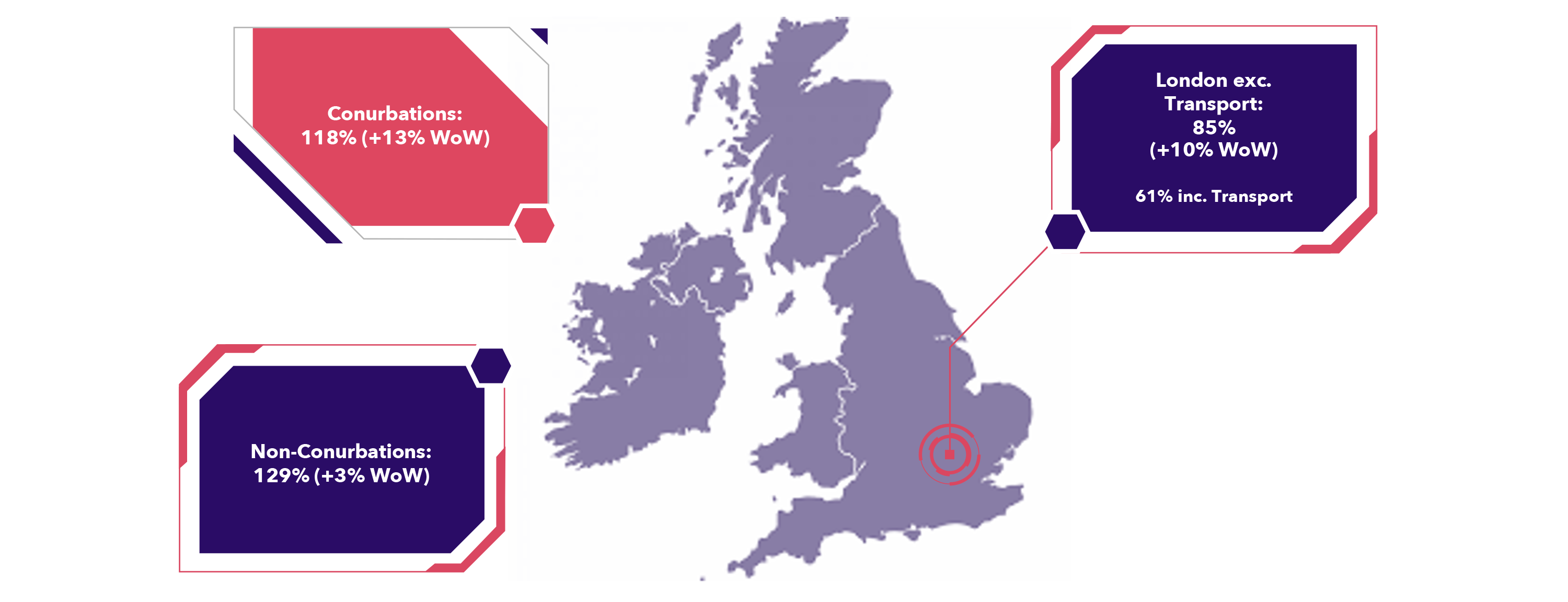
During previous lockdowns and periods of restrictions there has tended to be an uplift in non-conurbation areas as people stayed local through necessity. However, both conurbations and non-conurbations are currently performing strongly and delivering above pre-Covid levels.
London and Conurbation areas see a large increase week on week
Source: Kinetic Journeys W/C 24/01/22
What do we know about the London audience?
While London audiences are slightly down vs pre-pandemic levels due to a reduction in daily commutes for some and a small number of the population relocating elsewhere, the London market still delivers huge audiences and nearly 3 billion weekly impacts.
OOH’s weekly reach in London is c.8.5m, which is significantly larger than the weekly reach of other media across the capital (Instagram – 2.8m and ITV – 2.6m)
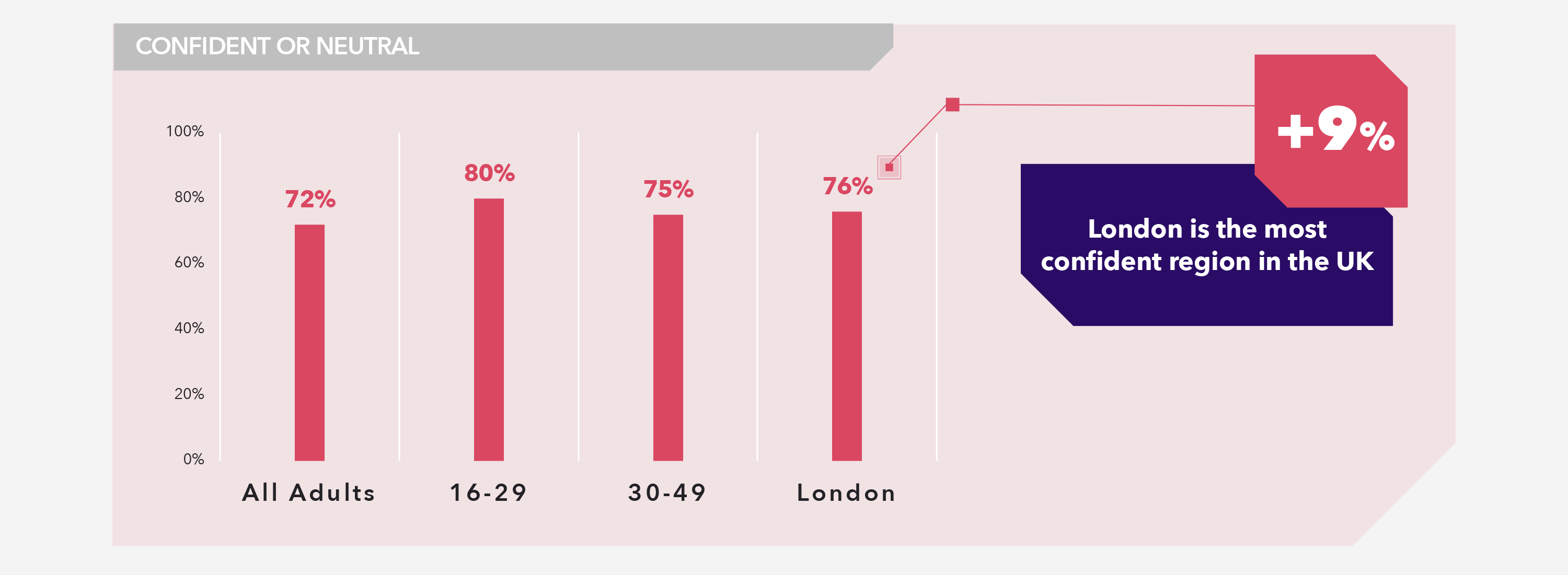
The main difference between London and the rest of the country is a higher proportion of people who can work from home. But this doesn’t mean they’re not leaving the house. Alfresco Life data shows Londoners will be going out more than the rest of the country in the coming months, fuelling further OOH audience growth in the capital.
Younger groups are the most confident being OOH, with confidence rising amongst all groups
Source: Alfresco Life, January 2022
How busy are city centres and key retail areas?
City centres and retail areas are performing well, with conurbations as a whole seeing OOH audiences above pre-Covid levels.
In the January 2021 lockdown, 40% of all spending was done online. But in most cities, the shift to online stalled when shops began to open again, and by September 2021 spending in stores had for the most part bounced back.
Google Mobility data for January shows increased footfall in Retail and Recreation areas, with figures close to those from early December 2021.
Footfall in retail and recreation areas is increasing week on week

Source: Google Mobility Trends: Retail and recreation
It’s been a busy start to the year for OOH, audiences are confidently out and about regularly in large numbers and demand is strong across Q1.
If you’d like more information based on the above, please get in touch with your Kinetic contact.
