
Today is a big day! With the reopening of major sectors like retail and some hospitality, many have already jumped at the change to get back to the places they love. And it’s only be a few hours. With £50bn pent-up spend up for grabs, Kinetic’s Chief Client Officer, Nicole Lonsdale takes a look at how people are planning on spending it and how you can influence them with OOH.
England’s High Street and shopping malls reopened today, alongside hair salons, gyms and a partial reopening of hospitality. Social media and news reports are full of footage of people happily queuing in the early hours to be amongst the first back into their favourite stores. You can bet the same will be seen of pub gardens later today.
This has been a long time coming for so many people who’ve found Lockdown 3 the toughest. And with over a year of some form of Covid restrictions in place, the CEBR estimate that the average UK household has saved £7,100 (including pensions and investments). This equates to £192bn in savings!
There is pent-up demand to spend this money alongside a growing confidence (with the UK now having vaccinated over 32 million people). This combination is expected to result in a £50bn spending spree, with purchases ranging from holiday and eating out to retail items. Countless studies from previous periods of uncertainty show that people like to treat themselves as a way of feeling better – from a new lipstick or item of clothing, to bigger ticket items like holiday and cars. And the next few months will be no exception as people once again return to life outside.
Revenge spending will drive OOH audience growth
The term ‘revenge spending’ has been used by many, and with the reopening of shops we predict significant audience increases across high streets and shopping malls. In fact, the next phase of unlocking will have a positive impact across all OOH environments.
Kinetic Journeys | Predicted OOH audience levels by environment:
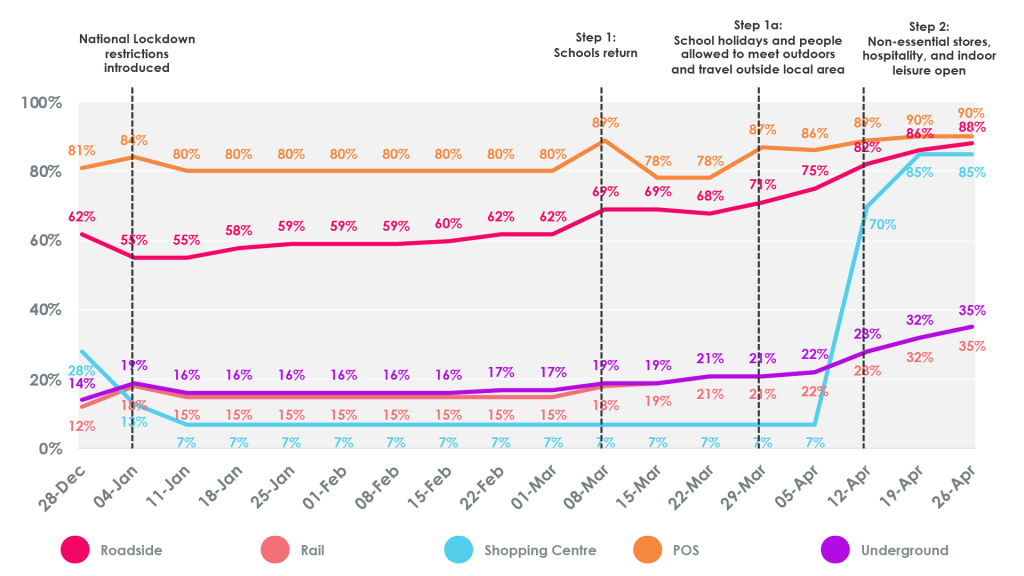
Many brands are already realising this, with availability on Roadside formats across both Classic and Digital selling well until the end of June. This trend is expected to continue across the summer, with advertisers keen to take advantage of large audiences outside.
For many people, they want the experience of physically visiting a shop or mall. Our Alfresco Life research indicates that 40% of adults will return to bricks and mortar shopping within the first week of reopening, rising to 100% by early June. As expected, it’s GenZ who’ll rush back fastest, with 81% wanting to treat themselves in shops once they’re allowed.
Previous figures from Springboard for lockdowns one and two, recorded a reduction in online spend once shops reopened. And an increase in retail footfall of 40% within the first week of restriction easing. This is largely driven by people’s need for human experience and interaction. The Retail Gazette is also predicting a decline in online sales post 12th April as people view a trip to the shops as an occasion, which obviously they’ve been denied. This dip will be a rebalance of online and in-store shopping, which long-term will continue to evolve as the retail landscape chances.
Covid and the changing purchase journey
Covid has no doubt accelerated eCommerce for many categories. Prior to March last year, online shopping in the UK accounted for 20% of total consumer spend. This jumped to 35% by January this year (CACI). But of this, over 50% was still typically influenced by a physical store whether through showrooming, being inspired in-store or click and collect.
Even though 65% of all purchases are still made in a physical store, customers are increasingly looking for an omnichannel retail experience. It’s not an either-or situation. This is evidenced through our Journeys platform where we can identify online fashion shoppers and demonstrate their increased mobility within shopping malls.
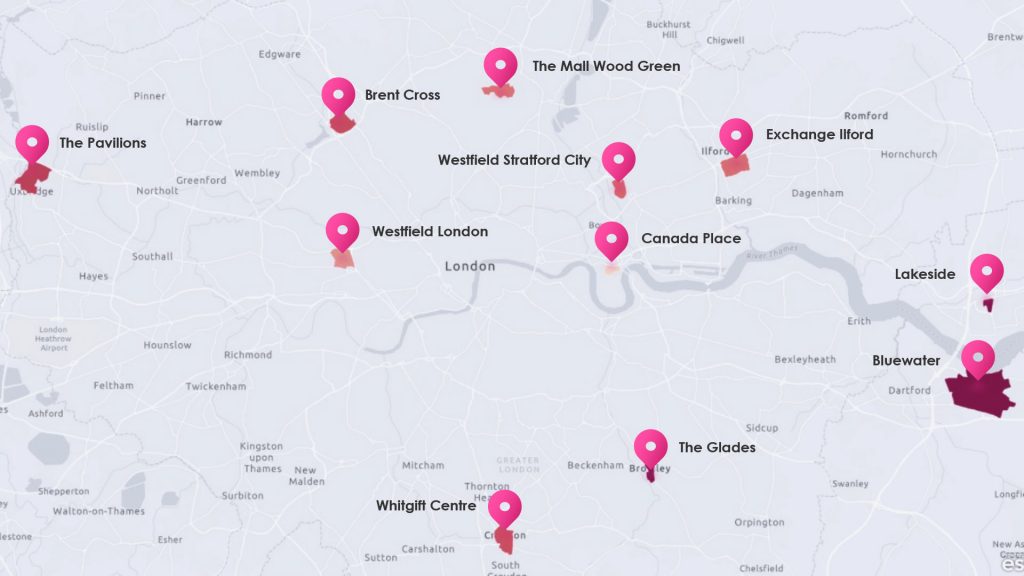
Shading indicates size of online shopper audience located within London shopping malls.
So, whether or not someone makes their final purchase on or offline, understanding the influences on their full buying journey has never been more important.
The role for OOH in driving commerce
With people increasingly choosing a hybrid way of shopping, OOH has an important role to play in influencing both. What is crucial, and even more so given the uncertain times we’re in, is the importance of a strong, recognisable brand. OOH has always been one of the most effective channels for delivering brand salience. It not only reaches 97% of UK adults cost effectively, but with frequency of journeys increasing again due to restrictions easing, milder weather and positive sentiment, it offers brands something that other channels cannot deliver – public messaging. This is incredibly important for conveying brand fitness, trust and confidence.
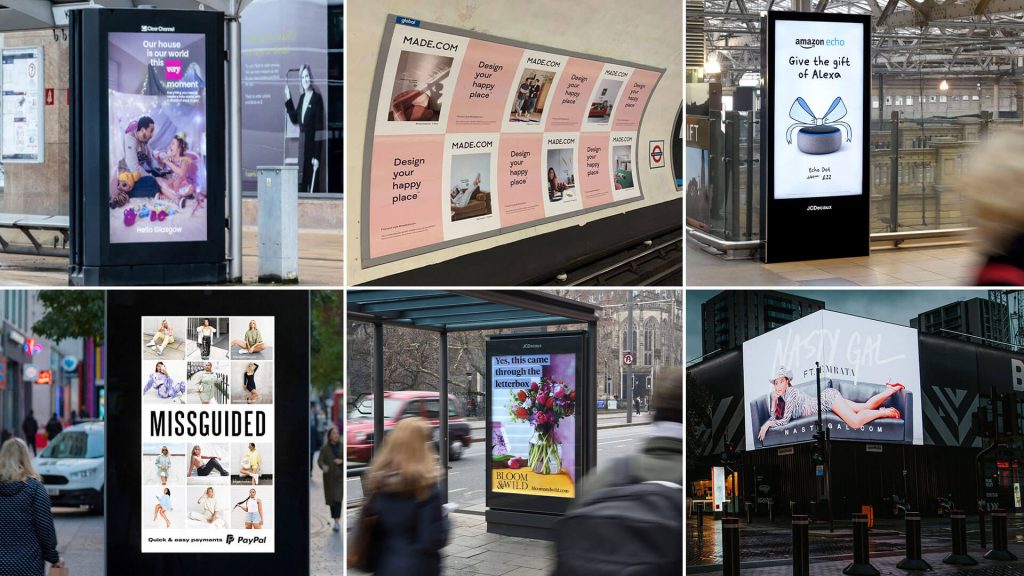
Many DTC brands have grasped the importance of this for years and ensure OOH is a firm feature on their media plans at all times. This includes eBay, Amazon, Very, Misguided and Boohoo who use OOH as their virtual shopfront.
OOH is also one of the most effective channels at driving online behaviours, particularly search. A study of IPA Effectiveness campaigns by Peter Field found that by adding OOH to search, business effects increased by +54%.
OOH makes other media work harder, particularly digital:
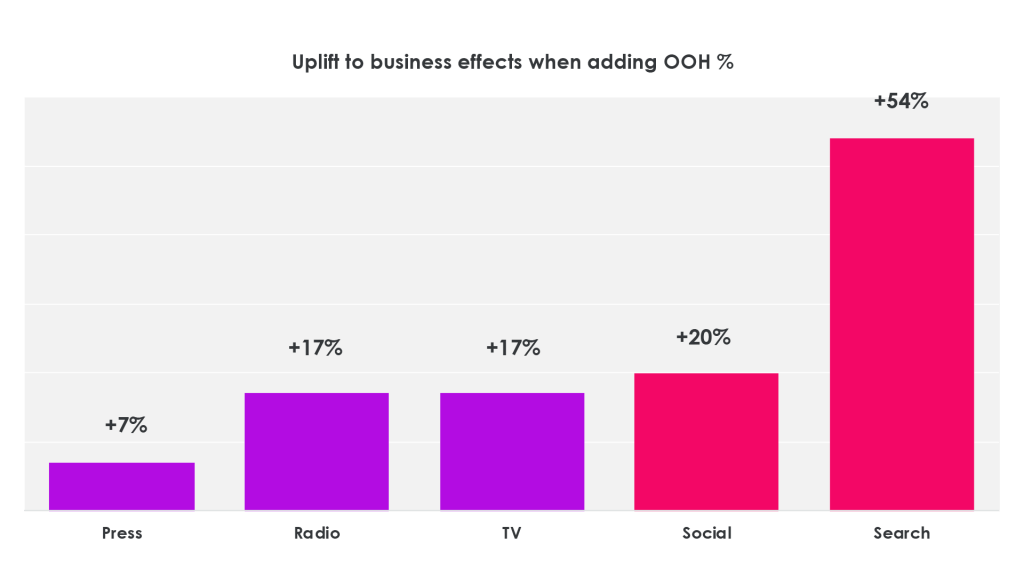
Source: Peter Field 2018 IPA databank. Analysis 2004-1016 case studies. 55 cases in analysis
Smarter OOH planning for retail brands
To capitalise on the growing OOH audience who are in a positive mindset and with money to spend, advertisers must consider both audience and context. With blended purchasing behaviour it’s not enough to simply be in proximity to store or just on the high street, you need to plan smarter. Through our Journeys platform, we can pinpoint where a brand’s customers or future customers are, what time they are there, their mindset and what message will resonate most with them.
The range of location and behavioural data within Journeys allows us to segment online and offline purchasers, as well as those loyal to competitors. We can deliver tailored plans that connect with audiences throughout their time spent outdoors to ensure a brand is kept front of mind, while also layering on contextual opportunities in environments where they are about to spend or thinking about it.
The importance of mCommerce and outdoor commerce
MCommerce now accounts for 50% of online retail sales, rising to 67% for fashion. A purchase can take place at any time and any place, including outside of the home. Over the past five years there’s been a growing trend of Commuter Commerce (or Outdoor Commerce) where items are bought on smartphones while people are outdoors – usually during high dwell time moments while on their journeys to and from work or socialising, or just generally while out and about.
Our Commuter Commerce study conducted with the CEBR found that £25bn was spent during people’s commutes in 2019. 43% made four or more purchases a month, and 70% were influenced by OOH advertising – OOH is the main media people are exposed to when outside of the home.
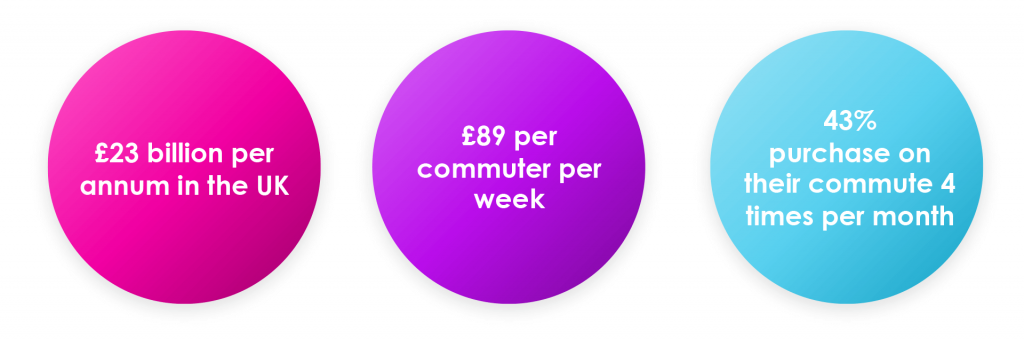
And while Covid and lockdowns have temporarily impacted the growth of Commuter/Outdoor Commerce, it’s here to stay. The continued expansion of frictionless and social commerce (whether it’s a buy now button on Instagram or Pinterest) is making it quicker and easier for people to buy, which means a shopping moment can happen whenever and wherever.
The role OOH can play in influencing the purchase journey at all stages is becoming more and more apparent, irrespective of whether the final transaction takes place in a physical store or online.
For more information about our tracking of OOH audiences, Journeys or OOH’s role in driving commerce, please speak to your Kinetic contact for more information.
